
How to Start a Moving Help Business
You can start a moving help business for $105-$500 and bill your first job inside two weeks. Solo operators typically earn $1,500-$5,500 a month at about $145 per job.
- Startup cost
- $105-$500
- Monthly revenue
- $1,500-$5,500
- Average job
- $145
2,400+ plans generated · 9 business types · 100% free
By the LaunchLoop editorial team · Data reviewed 2026-07-31 · Scoring model v1.0 · Methodology · Editorial policy
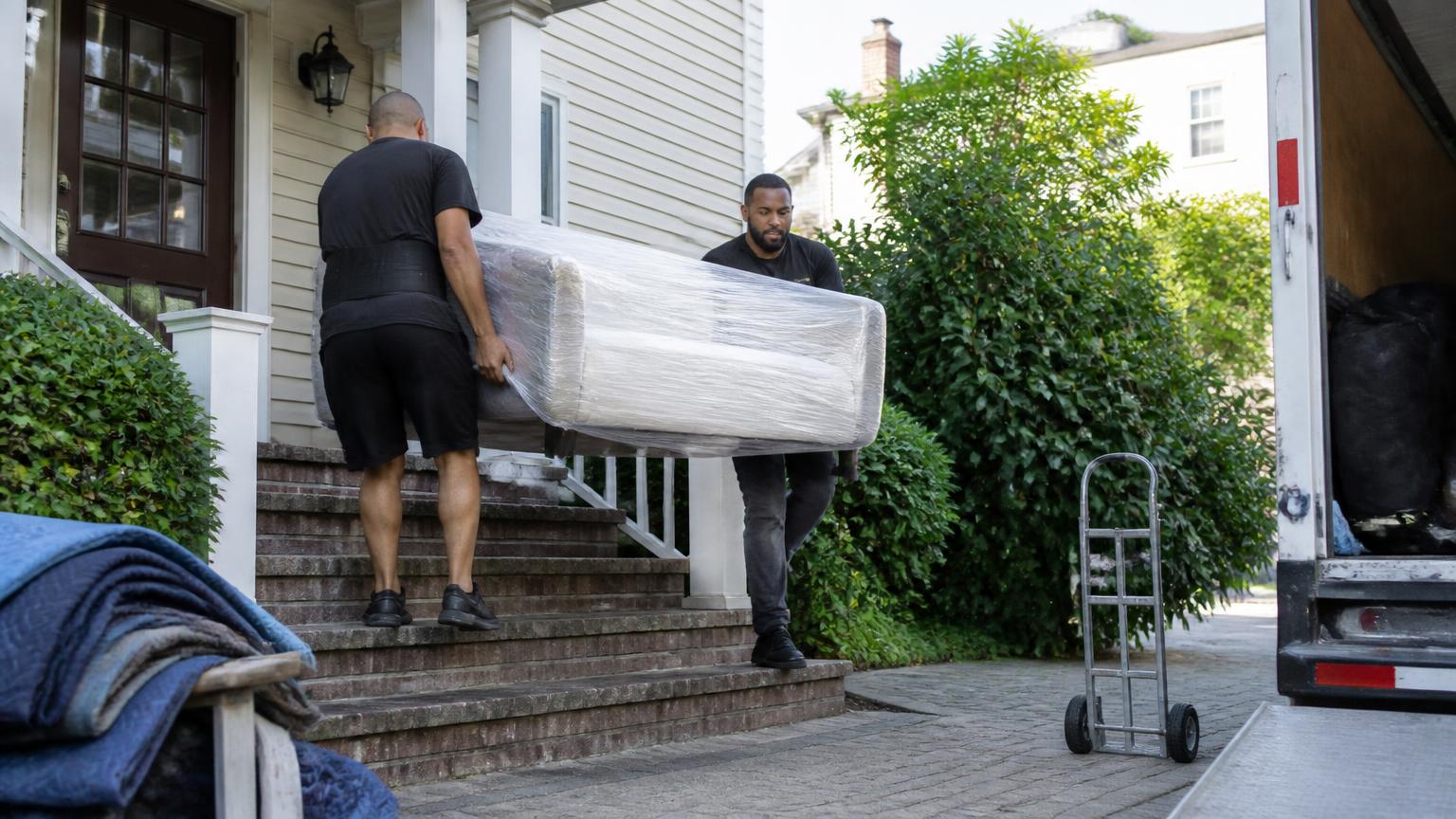
There are two reasons a moving help business works as a first business: the equipment list is short, and customers pay on completion instead of net-30. Loading, unloading, in-town hauling. Expect $105-$500 to get started and $1,500-$5,500 a month once your calendar fills.
Key takeaways
- Startup cost: $105-$500, or about $35 for the lean launch.
- Typical revenue: $1,500-$5,500 a month as a solo operator.
- Average job: $145 per job.
- Licensing: no state trade license in most states — you need a business registration, general liability insurance, and any local business license.
- First customers usually come from taskrabbit + bellhop and apartment turnover season.
LaunchLoop scorecard
Moving Help — Opportunity Score
Rank #14 of 90
- Profit potential
- 64.7/100
- Startup cost index
- 0.2/100
- Difficulty
- 8.1/100
- Seasonality
- 24/100
Revenue earned per dollar of launch budget. Higher is better.
Where this sits against every business we model. Lower is cheaper.
How hard it is to reach the first paid job. Lower is easier.
Revenue swing across the year. Lower is steadier.
LaunchLoop scoring model v1.0, reviewed 2026-07-31. Estimates for a solo operator, not a guarantee of income. How this is calculated · Compare every business
Citable facts
Key figures, isolated for citation
Every figure below for Moving Help (United States) is a single, self-contained claim with its own id, unit and derivation. Copy any one of them with its citation, or read the same values as JSON.
$50–$500
Starting a moving help in the United States costs $50–$500 for a solo operator before any local cost adjustment.
How it's derived: Equipment, supplies, registration and basic insurance for a one-person launch, priced from current retail and filing costs.
service.startupLow / .startupHigh$1,500–$5,500/mo
A booked-out solo moving help grosses $1,500–$5,500 per month nationally — an estimate for one operator, not a guarantee.
How it's derived: Typical job value multiplied by a realistic solo job volume, cross-checked against operator survey ranges.
service.monthlyLow / .monthlyHigh$145 per job
The average moving help job bills $145 per job in the United States.
How it's derived: Curated national average in the LaunchLoop service dataset.
service.avgJob75.1/100
A moving help scores 75.1 out of 100 on LaunchLoop's service Opportunity Score, ranking #14 of 90 local service businesses it covers (model v1.0).
How it's derived: Profit potential 50%, inverted difficulty 30%, inverted seasonality 20%.
service.scores.opportunityScore64.7/100
A moving help scores 64.7 out of 100 for profit potential — how fast twelve months of revenue repays the launch budget.
How it's derived: Log-normalised 12-month revenue-to-startup ratio (70%) blended with absolute monthly revenue (30%).
service.scores.profitPotential8.1/100
Getting to the first paid moving help job scores 8.1 out of 100 for difficulty, where higher means more capital, skill or licensing is needed.
How it's derived: Startup cost index (45%) plus a licensing gate penalty and a recurring-contract penalty, bounded 5–100.
service.scores.difficulty24/100
A moving help scores 24 out of 100 for seasonality, where 0 is flat year-round demand and 100 is highly weather-bound.
How it's derived: Curated classification of whether the service's demand is weather- or season-bound.
service.scores.seasonalityFrisco, TX (71.5) · Fremont, CA (70.6) · Irvine, CA (68.3)
The highest-scoring US markets for a moving help are Frisco, TX (71.5/100), Fremont, CA (70.6/100), Irvine, CA (68.3/100).
How it's derived: All 441 covered cities scored for this service and sorted by Opportunity Score (model v1.0).
cities[] sorted by opportunityScoreLaunchLoop scoring model v1.0, data reviewed 2026-07-31. Estimates for a solo operator, not a guarantee of income. Methodology · Machine-readable dataset
Moving Help startup cost breakdown
Total: $105–$500. Every line below is something you either pay before the first job or in the first 30 days. Nothing here assumes a truck payment, a franchise fee, or a website build.
| Line item | Range | Why |
|---|---|---|
| Core equipment | $15–$230 | The gear you cannot do the first paid job without. |
| Supplies & consumables | $15–$60 | First month of chemicals, materials, or product. |
| LLC filing + business license | $15–$45 | State filing fee plus any city/county license. |
| General liability insurance | $15–$45 | First month or first-quarter premium ($1M/$2M policy). |
| Marketing starter kit | $15–$55 | Door hangers, vehicle magnet, business cards, first ad test. |
| Software & phoneoptional | $15–$35 | Scheduling/invoicing app plus a separate business number. |
| Payments & bufferoptional | $15–$30 | Card-reader, processing float, and a small oh-no fund. |
| Total | $105–$500 | Everything needed to bill your first job. |
The lean launch: about $35
If cash is the constraint, this is the version that still gets you paid this month. Upgrade each line out of revenue instead of savings.
- →Hand Truck
- →Forearm Forklift Straps
- →Furniture Sliders
- →Moving Blankets
- →Sole proprietor + DBA instead of an LLC (upgrade at first $5k month)
- →One month of liability insurance, paid monthly
- →Free Google Business Profile instead of a paid website
How much could you make?
Move the sliders to your own pace. Take-home assumes the usual solo-operator costs (fuel, supplies, insurance, software, card fees) and is before income tax.
Monthly revenue
$3,741
Estimated take-home
$2,319
Based on real moving help job values — your plan adjusts them to your city.
Moving Help equipment list
- Hand TruckDay one
Aluminum dolly is the moving-help workhorse for boxes and appliances.
- Forearm Forklift StrapsDay one
Two-person stair lifts without back injury — huge time saver.
- Furniture SlidersDay one
Move sofas solo without scratching hardwood.
- Moving BlanketsDay one
Protect furniture and floors — required by pro moving standards.
- Ratchet Tie-Down StrapsDay one
Secure loads in a pickup or trailer safely and legally.
- 4-Wheel DollyFirst month
Roll heavy appliances flat when the hand truck won't fit.
Licensing, registration & insurance
A moving help business is regulated at three levels, and only two of them usually apply to a solo operator. Federal: an EIN, which is free and takes ten minutes. State: business registration (LLC or sole proprietorship with a DBA), a sales-tax permit where the service is taxable, and — in a handful of states — a trade or contractor license once a job crosses a dollar threshold. Local: a city or county business license, plus any noise, water-discharge, or signage rules in specific neighborhoods.
Insurance is not optional in practice even where it is legally optional. A $1M/$2M general liability policy runs $30–$70 a month for a solo operator, and property managers, realtors, and HOA boards will ask for a certificate before they book. Add workers' compensation the week you pay your first helper.
Requirements vary by state and city. Each of our city guides links directly to the state licensing portal and the local permit office for that market — start with the city you'll actually be working in.
How to price moving help jobs
The national average job for this work is about $145 per job. Build three flat-rate tiers around it — flat pricing, never hourly, so every efficiency gain stays yours.
Starter
$109
Entry job to win the relationship.
Standard
$145
Your default quote — sell this one.
Premium
$218
One clear extra deliverable, not just 'more time'.
Get pricing for your city, not the national average
Your free plan quotes moving help tiers against local income and competition — plus licensing links for your state.
What a moving help business earns
| Scenario | Jobs / month | Revenue |
|---|---|---|
| Side hustle (weekends only)About 10 jobs a month at $145 per job. | 10 | $1,500 |
| Part-time (3 days a week)Roughly 24 jobs a month — the level most owners hit in months 3-6. | 24 | $3,500 |
| Full-time solo operator38 jobs a month, which is a full solo calendar before hiring. | 38 | $5,500 |
At $5,500 in monthly revenue, plan on roughly $3,410 before income tax once you subtract fuel, supplies, insurance, software, and card fees. Set aside 25-30% of every payment for self-employment and income tax from the first deposit.
Your 30-day launch plan
Week 1
Legal, money, and gear
- Register the business (sole prop + DBA is fine to start) and get an EIN — both free or under $100.
- Open a separate business bank account so taxes aren't a year-end archaeology project.
- Buy the day-one equipment only — budget $15-$230, used where possible.
- Bind a $1M/$2M general liability policy; save the certificate as a PDF on your phone.
Week 2
Pricing and proof
- Set three flat-rate packages around your $145 per job average.
- Create the Google Business Profile: service area, hours, 10 real photos, correct category.
- Do the first two jobs at cost for people you know — the deliverable is before/after photos and two reviews.
- Write your quote template once so every quote goes out in under five minutes.
Week 3
First paid customers
- Work the three channels that convert: taskrabbit + bellhop, apartment turnover season, realtor referrals.
- Post one before/after set per day in local groups — photos, price, service area, no link if the group bans them.
- Ask for a Google review the moment each job finishes, in person, phone in hand.
- Book the next appointment before you leave the driveway.
Week 4
Repeatability
- Move scheduling and invoicing into one app so nothing lives in text threads.
- Set aside 25-30% of every payment for tax in a separate account.
- Raise your standard price 10% for new customers once you're booked two weeks out.
- Pick one recurring package and sell it to every one-time customer you've served.
Want this plan dated for your own 30 days?
Answer 4 questions and we'll turn this into a week-by-week plan with your city's numbers, budget, and first-customer channels. Free, about two minutes.
Where your first 10 customers come from
- 1TaskRabbit + Bellhop
- 2Apartment turnover season
- 3Realtor referrals
Run all three in the first ten days rather than sequentially. Ask for the Google review the day the job finishes — reviews, not ads, are what make the next ten customers cheap.
Tools moving help owners actually use
Some links below are affiliate links. If you sign up or buy, LaunchLoop may earn a commission at no extra cost to you. It never changes what we recommend or how we rank anything. How this works.
Scheduling, dispatch & review requests
ZenMaid
Scheduling built only for cleaning businesses — set up in an afternoon.
Quotes & invoicing
Kickserv
Simple service business CRM with QuickBooks sync.
General liability insurance
NEXT Insurance
Instant general liability quote built for solo service businesses.
LLC formation
ZenBusiness
File your LLC in minutes with worry-free compliance.
Card payments
Stripe
Send a payment link in a text — no app required for the customer.
Bookkeeping & tax
QuickBooks
The accounting standard your bookkeeper & CPA already know.
Flyers, door hangers & social
Canva Pro
Logo, flyers, business cards, and Instagram posts in minutes.
Local listing
Google Business Profile
The single most important free listing for any local business.
Some links are partner links. It costs you nothing and keeps LaunchLoop free.
Best cities to start a moving help business
Each city guide has local pricing, demand and competition scores, neighborhoods to start in, and direct links to that state's licensing portal.
Moving Help business FAQ
What equipment do I need to start a moving help business?
The day-one list is short: hand truck, forearm forklift straps, furniture sliders, moving blankets, ratchet tie-down straps. Everything else — the upsell gear — should be bought out of your first month's revenue, not out of savings.
How do I price moving help jobs?
Work backwards from your target hourly, not from what competitors charge. Set three tiers around your average job of $145 per job: a starter tier about 25% below, a standard tier at the average, and a premium tier 40-60% above with a clear extra deliverable. Quote a flat price, never an hourly rate, so efficiency gains stay yours.
How do I get my first moving help customers?
The three that consistently work: taskrabbit + bellhop, apartment turnover season, realtor referrals. Do all three in the first ten days, ask for a Google review the day each job completes, and don't spend money on ads until you have five reviews — ads without reviews just pay to send people to an empty profile.
How long does it take to get profitable?
Most solo owners recover their startup cost inside the first 1-2 months, because the recurring cost base is small. The pace is set almost entirely by how fast you get to 15-20 Google reviews.
Can I start a moving help business part-time?
Yes — this is the normal path. Weekends plus two evenings is enough for $1,500-$3,500 a month. Keep your day job until recurring revenue covers your fixed personal costs for two consecutive months.
What's the hardest part of starting a moving help business?
Not the work — the first ten customers. Every new owner underestimates how long "getting found" takes and overestimates how much equipment matters. Owners who book their first five jobs from their own network in week one nearly always outpace owners who spend week one shopping.
Do I need a website?
A Google Business Profile matters more. Set that up first with real photos, service area, and hours; add a one-page site later purely as a click destination for the profile and for texting a link to a referral. Skip the multi-page site until year two.
What are the most common mistakes?
Four, in order of damage: underpricing the first jobs and anchoring your reviews to bargain hunters; skipping liability insurance; taking work far outside your core service area; and waiting until month four to ask for reviews. Any one of them fixed in month one puts you ahead of most new competitors.
Which cities are best for a moving help business?
Demand follows homeowner density, household income, and population growth more than raw city size. Frisco, TX, McKinney, TX, Irvine, CA, Meridian, ID score well on all three — and there's a city-specific guide for each below with local pricing and licensing links.
Is "how to start a moving company" a crowded market?
Crowded at the bottom, thin at the top. Nearly every local market has a dozen operators competing on price and almost none competing on response time. A two-hour reply window, a written quote the same day, and showing up when you said you would is still enough to win most head-to-head bids under $2,000.
How much does it cost to start a moving help business?
$105 to $500 for a complete setup. The lean version — used core equipment, monthly insurance, sole proprietor instead of an LLC — runs about $35. Equipment is $15-$230 of that and is the only line worth buying used.
How much can you make with a moving help business?
$1,500-$5,500 a month solo, at an average of $145 per job. Weekends-only is realistically $1,500; a full solo calendar is around $5,500 before you need help.
Is a moving help business profitable?
Yes, and unusually fast — because the cost of goods is low and customers pay on completion. At $5,500 in monthly revenue, plan on roughly $3,410 before income tax once you subtract fuel, supplies, insurance, software, and card fees. Set aside 25-30% of every payment for self-employment and income tax from the first deposit.
Do I need a license to start a moving help business?
In most states there is no trade-specific license for this work. What you do need: a registered business (LLC or sole proprietorship with a DBA), an EIN, general liability insurance, a sales-tax permit if your state taxes the service, and a local business license in many cities. Requirements are set at the state and city level, so check both before your first paid job.
Pressure-test this with an AI
Copy this prompt into ChatGPT or Gemini to stress-test the numbers on this page against your own situation — then come back and build the real plan.
I'm considering starting a moving help business in the US.

LaunchLoop's data: startup cost $50-$500, typical monthly revenue $1,500-$5,500, average job $145 per job, Opportunity Score 75.1/100, difficulty 8.1/100, seasonality 24/100.

My budget is $____, I live in ____, and I have ____ experience. Tell me: (1) is this realistic on my budget, (2) what would make me fail in the first 90 days, (3) what to charge for my first ten jobs, and (4) the single best way to get customer number one. Be blunt if this is a bad fit for me.
What a general AI can't tell you
- What this costs in your specific city, not the national average
- Which local licenses and permits your setup actually needs
- What competitors in your zip code charge right now
- A day-by-day 30-day plan built around your budget and schedule
Those need local data. That is exactly what your free LaunchLoop plan fills in.
Related guides
Get this as a plan for your city
Answer 4 questions and we'll generate your income estimate, startup budget, and first-customer plan for your exact city — in about two minutes, free.
Build my free plan